Book a Consultation
Classifications and Credentials:


What’s the Difference Between Class I, Class II, and Class III Railroad Track Standards?
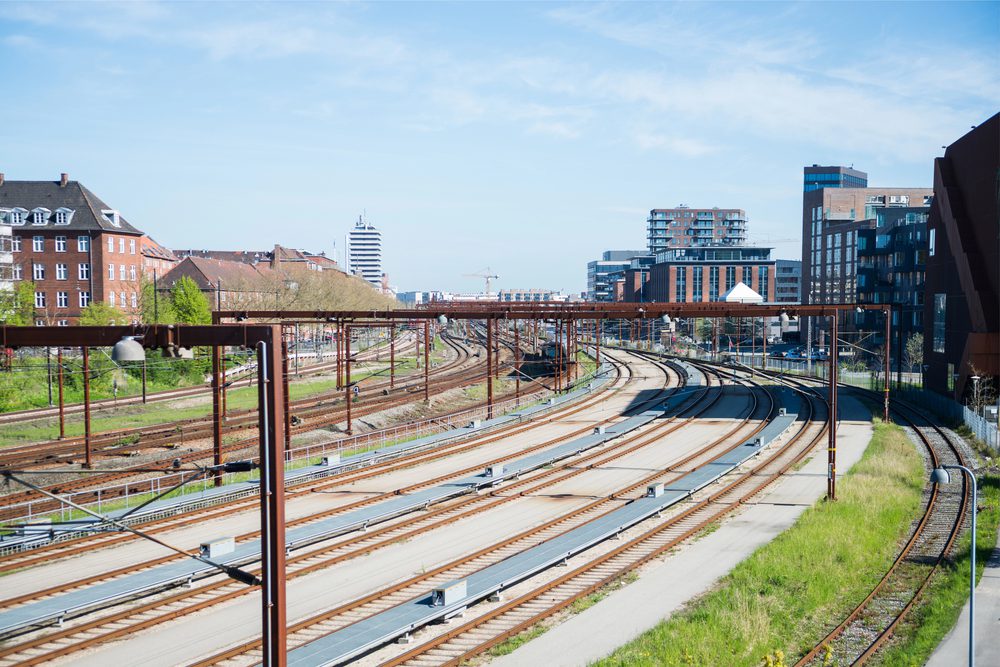
Not all railroad track is built or maintained to the same specification, and that distinction matters far more than most people outside the industry realize. A yard spur serving a manufacturing facility has very different demands than a mainline corridor carrying high-volume freight traffic. The Federal Railroad Administration recognized this reality and established a classification system under 49 CFR Part 213 that ties permitted operating speeds to specific geometry tolerances, inspection requirements, and maintenance standards.
For railroad operators, facility owners, and transportation companies across Kentucky, Illinois, and Tennessee, understanding where your track falls within this system is not optional. It shapes your compliance obligations, your maintenance budget, and ultimately your safety record. Whether you manage a short line railroad, an industrial spur, or a regional corridor, the FRA’s track classes define the rules you operate under.
Track Tech Inc. has been helping clients navigate these standards since 1980. Over more than four decades, we have worked across all three of the lower track classes on everything from routine tie replacement to full turnkey rehabilitation projects. In this article, we break down what Class I, Class II, and Class III track standards actually mean in practical terms, and what each class requires from the people responsible for maintaining it.
The Purpose Behind the FRA’s Classification System
The FRA established its track safety standards under 49 CFR Part 213 with a straightforward premise: the faster a train moves, the less tolerance there is for imperfection in the track beneath it. Speed amplifies the forces acting on rail, ties, and ballast. A geometry deviation that a slow-moving industrial switcher barely notices can become a serious derailment risk at mainline speeds.
The classification system addresses this by setting minimum requirements for track geometry, rail condition, and structural integrity at each speed tier. Geometry tolerances cover four primary measurements: gauge (the distance between the running faces of the rails), alignment (the lateral straightness of the track), surface or profile (the vertical smoothness of the rail), and cross-level (the relative elevation of one rail compared to the other). As the class number increases, the permitted deviation in each of these measurements decreases.
The system also protects both freight and passenger operations. Passenger trains impose different dynamic loads than freight trains, which is why the FRA sets separate speed limits for each type of service within every class. A Class I track segment may allow freight at 10 mph and passenger service at 15 mph. That distinction reflects the different ride quality and safety expectations for each service type.
If you own or operate track, you are legally accountable for ensuring that your infrastructure meets the standards for the class under which you operate. The FRA enforces this through required inspection programs, and inspectors verify compliance through direct measurement and documentation review.
For industrial facilities and short line operators in our region, this is not an abstract regulatory concern. It is a practical reality that affects daily operations and long-term capital planning.
Class I Track: Low-Speed Operations and Their Requirements
Class I is the lowest FRA classification for track in regular service. It permits freight train speeds up to 10 mph and passenger train speeds up to 15 mph. You will find Class I track most commonly in railroad yards, industrial spurs, storage sidings, and other low-speed environments where slow, deliberate movements are the norm.
Because trains move slowly on Class I track, the geometry tolerances are the most permissive of any operating class. The FRA allows wider variations in gauge, surface deviation, and alignment than it does at higher classes. For example, the permitted gauge variation on Class I track is broader than what is acceptable on Class II or Class III, reflecting the reduced risk that those deviations pose at low speeds.
Cross-level tolerances are similarly relaxed. A modest amount of variation between the elevation of one rail and the other is acceptable on Class I because slow-moving equipment can absorb that irregularity without the dynamic instability that would develop at higher speeds.
That said, Class I is not a free pass to neglect maintenance. We see this misconception cause real problems for industrial facility owners who assume that because their spur moves slowly, it can be left alone indefinitely. Deteriorating ties, fouled ballast, and widening gauge do not respect speed limits. A derailment on a Class I industrial spur can damage equipment, injure workers, and halt production just as effectively as a failure on a higher-class line.
FRA inspections still apply to Class I track, and violations still carry consequences. A track segment found to be out of compliance can be restricted to “excepted track” status, which carries severe operational limitations, or taken out of service entirely until defects are corrected.
For industrial facilities in our region, we regularly perform tie replacement, surface corrections, and gauge adjustments on Class I spurs. The goal is always to keep the track well within tolerance rather than waiting until conditions approach the compliance boundary.
Class II Track: The Middle Ground for Branch Lines and Regional Corridors
Class II track permits freight speeds up to 25 mph and passenger speeds up to 30 mph. This classification covers a broad range of infrastructure: branch lines connecting regional markets, short line railroad main tracks, moderate-traffic industrial corridors, and connecting tracks between larger rail systems.
The geometry tolerances at Class II are noticeably tighter than those at Class I. The FRA reduces the allowable gauge variation, tightens the limits on surface deviation, and sets stricter cross-level requirements. What this means practically is that the underlying track structure needs to be in better condition to stay within tolerance. Ties must provide adequate support across a greater length of track. Ballast depth and quality matter more because the track needs to resist lateral and vertical movement under the higher dynamic forces that come with increased speed.
Rail wear becomes a more active concern at Class II as well. Worn rail profiles can contribute to gauge-widening and affect the way wheel flanges interact with the rail, which becomes more consequential as speeds increase.
Many of the short line and regional railroads we work with across our service territory operate primarily at Class II. This classification represents a meaningful investment in infrastructure quality, and sustaining it requires a consistent maintenance program rather than periodic emergency responses to deterioration.
The challenge for Class II operators is that the consequences of deferred maintenance compound over time. A segment that drifts out of Class II tolerance does not simply stay at Class II with a warning. It gets downgraded, which forces speed restrictions and can disrupt connection agreements with larger carriers. For short line operators, a speed restriction on a key segment can affect the economics of an entire route.
We approach Class II maintenance planning with our clients by establishing regular surfacing cycles, monitoring tie conditions systematically, and scheduling ballast work before drainage problems develop.
Class III Track: Higher Speeds and Stricter Geometry Demands
Class III track permits freight speeds up to 40 mph and passenger speeds up to 60 mph. This classification applies to mainline segments that carry significant traffic volumes, connecting corridors between major rail hubs, and any line where operating efficiency depends on sustaining higher speeds.
The geometry tolerances at Class III are substantially tighter than those at Class II. Gauge variation allowances are reduced further. Surface and alignment tolerances tighten in ways that require the track structure to be both well-built and consistently maintained. Cross-level requirements become more demanding because at 40 mph, even a modest variation in rail elevation creates dynamic forces that can stress equipment and, in worst cases, contribute to derailment.
Rail condition takes on greater importance at Class III. Joint bar integrity matters because compromised joints can create surface irregularities that are far more consequential at higher speeds. Drainage becomes a structural concern, not just a cosmetic one, because water-saturated subgrade undermines ballast support and accelerates geometry degradation.
Inspection frequency increases at Class III as well. The FRA requires more frequent track inspections for higher-class track, and the documentation expectations are correspondingly detailed. Track owners must maintain records that demonstrate compliance, and inspectors review those records alongside the physical condition of the track.
The practical implication is that defects on Class III tracks demand a faster response. A geometry deviation that might be acceptable to monitor on a Class I spur can force a speed restriction or temporary closure on a Class III mainline.
We at Track Tech Inc. work with mainline operators in our region to build proactive maintenance programs that catch developing problems before they reach the threshold for a speed restriction. That means regular inspection cycles, prompt defect remediation, and coordinated planning for tie replacement and surfacing work that minimizes operational disruption.
How Track Class Shapes Maintenance Strategy and Budget
Understanding your track class is the starting point for any honest conversation about maintenance investment. Higher classes demand more from the infrastructure and, in turn, require more consistent attention and faster response to developing defects.
The relationship between class and cost is not linear. Moving from Class I to Class II standards does not simply double the maintenance requirement. It changes the nature of the maintenance program. Class II and Class III tracks require more frequent surfacing cycles, tighter tie spacing standards, better ballast quality, and faster turnaround on defect repairs. The inspection program becomes more rigorous, and the documentation burden increases.
For capital improvement planning, knowing your current track class helps you set realistic goals. If you operate a spur at Class I but your operational needs have grown to the point where faster car movements would improve productivity, upgrading to Class II requires a systematic assessment of tie condition, ballast depth, gauge, and surface quality across the entire segment. That assessment drives the project scope and the budget.
We approach this kind of planning with clients by starting with a thorough track inspection to establish a baseline. From there, we identify which components are already within Class II tolerance and which need remediation. That targeted approach avoids unnecessary work and focuses investment where it will actually move the track into compliance.
For clients maintaining existing Class II or Class III track, the planning question is different. It is not about upgrading but about sustaining. We help clients build maintenance schedules that distribute work across the calendar rather than accumulating deferred projects that eventually require expensive mobilizations. Services like tie replacement, ballast undercutting, surface and line corrections, and turnout maintenance all fit into a coordinated program that keeps track within tolerance and avoids emergency responses.
Our turnkey project management capability means we can take a rehabilitation project from initial assessment through final inspection, coordinating labor, materials, and on-track safety without putting that burden on the client’s internal team.
Compliance, Inspections, and Choosing the Right Maintenance Partner
FRA compliance is an ongoing obligation. The inspection frequency required under 49 CFR Part 213 varies by track class and traffic density, but the principle is consistent: defects must be identified and corrected before they become safety hazards.
Falling out of compliance carries real consequences. The FRA can issue slow orders that reduce permitted operating speeds, which affects operational efficiency and can disrupt service commitments. Civil penalties apply to documented violations. In serious cases, the FRA can require that a segment be taken out of service until defects are corrected. For a short line operator or an industrial facility, any of these outcomes has an immediate financial impact.
Regular third-party inspections add a layer of assurance that internal programs alone may not provide. An experienced inspector brings familiarity with how the FRA evaluates compliance and can identify developing conditions that internal staff might overlook or underestimate. Catching a defect during a routine inspection is always preferable to discovering it during an FRA audit or, worse, after an incident.
We provide comprehensive track inspection services across our region, along with the full range of maintenance and construction services needed to address whatever those inspections uncover. Our team understands the regulatory framework at each track class and brings the field experience to translate compliance requirements into practical maintenance work. Whether a client needs a targeted defect correction, a systematic tie replacement program, grade crossing renewal, or a full-service railroad construction contractor, we have the capability and the regional presence to deliver it.
Our on-track safety and flagging services ensure that all work is conducted in compliance with FRA worker protection requirements, which is a critical consideration for any contractor working on active rail infrastructure.
Putting It All Together
The difference between Class I, Class II, and Class III track standards is not just a matter of speed limits printed in a federal regulation. It is a practical framework that defines what your infrastructure must be capable of, how often it needs to be inspected, and what level of investment is required to keep it there.
For railroad operators and facility owners in Kentucky, Illinois, and Tennessee, understanding where your track stands within this framework is the foundation for every maintenance decision you make. It tells you what tolerances you need to meet, what the consequences of falling short look like, and what kind of program will keep you on the right side of compliance over the long term.
Track Tech Inc. has spent more than four decades helping clients across this region do exactly that. From Class I industrial spurs to Class III mainline segments, we bring the expertise, the equipment, and the regulatory knowledge to keep track operating safely and within FRA standards.
If you are ready to evaluate your current track conditions, build a maintenance program suited to your track class, or address specific defects before they become violations, we want to hear from you. Visit our home page to learn more about who we are, explore our full range of services, including track inspection, tie replacement, surfacing, turnout installation, and turnkey project management, or contact us directly to talk with our team about your specific needs. We are here to help you operate safely, stay compliant, and get the most from your rail infrastructure.