Book a Consultation
Classifications and Credentials:


Signs Your Railroad Ties Need Replacement Before They Fail
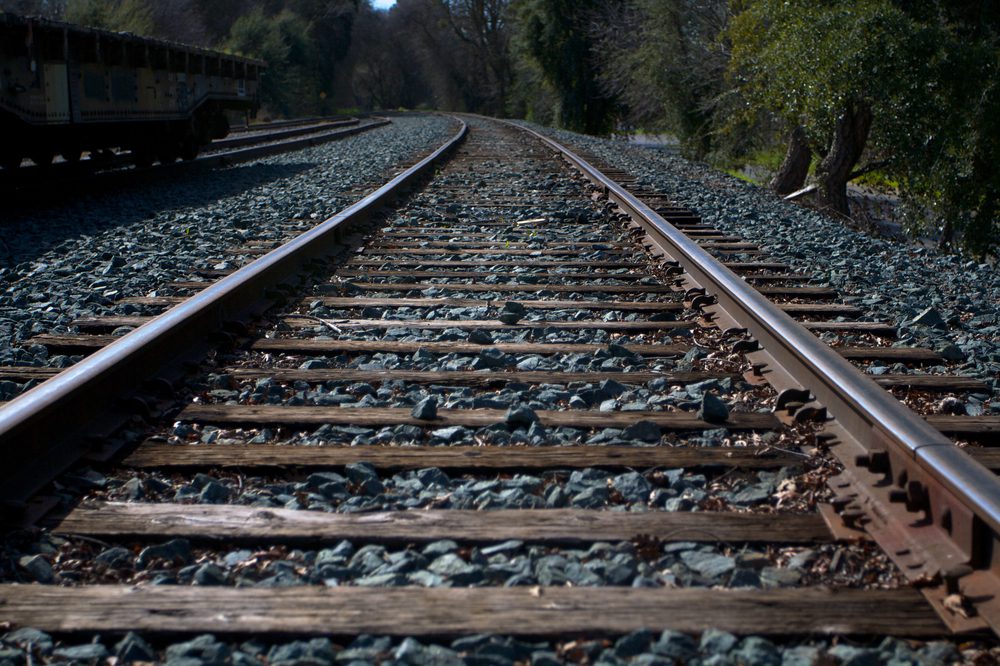
Over the course of more than 30 years in railroad construction and maintenance, we at Track Tech Inc. have seen the same scenario play out more times than we can count. A facility manager or railroad operator walks a section of track, sees nothing obviously wrong, and moves on. A few weeks later, that same section is generating a slow order, or worse, it has become an emergency repair situation that shuts down operations entirely.
Railroad tie replacement is not a routine checkbox on a maintenance list. It is a safety imperative. The structural integrity of your entire track system depends on ties holding rails at the correct gauge, anchoring fasteners under repeated load, and transferring the weight of moving trains down into the ballast and subgrade. When ties fail, everything built on top of them becomes unstable.
The challenge is that tie degradation is gradual. It rarely announces itself with an obvious crack or a sudden collapse. It works quietly over months or years, and by the time the signs become impossible to ignore, you are already in reactive mode. We put this guide together specifically to help railroad operators, facility managers, and transportation companies across Kentucky, Illinois, and Tennessee recognize the early warning signs. The goal is to help you act before a manageable maintenance need becomes a costly, disruptive failure.
Why Ties Deteriorate Faster Than Most Operators Expect
Most people assume tie condition is primarily a function of age. If the ties were installed recently, they should be fine. If they are old, they are suspect. In our experience, that thinking leads operators to miss serious problems and overlook others that do not yet need attention.
The conditions in Kentucky, Illinois, and Tennessee create a particularly demanding environment for wood ties. The region experiences wide seasonal temperature swings, high humidity during summer months, and freeze-thaw cycles in winter. Moisture is the primary enemy of treated wood ties. When water penetrates the wood through checks, splits, or degraded treatment, it accelerates decay from the inside out. A tie can look structurally sound on the surface, while the core has already softened significantly.
Heavy axle loads compound the problem. Industrial spurs serving manufacturing facilities, ports, or aggregate operations often carry loads that exceed what the original tie installation was designed to handle. Each pass of a heavy consist drives the rail plate deeper into the tie’s rail seat. Understanding the hidden costs of neglecting track maintenance can help operators justify earlier intervention.
Chemical exposure adds another layer of complexity in industrial settings. Facilities handling petroleum products, fertilizers, or other corrosive materials can see accelerated tie degradation from ground contamination alone. We have assessed tracks at industrial facilities where ties that were only a decade old were already failing because of chemical saturation in the surrounding ballast and subgrade.
The other factor operators consistently underestimate is the compounding effect of deferred inspection. A single degraded tie is a manageable problem. But when professional railroad track inspections are skipped or delayed, that one soft tie shifts additional stress to its neighbors. The Federal Railroad Administration’s track safety standards under 49 CFR Part 213 define conditions that require immediate remediation, but the goal of a sound maintenance program is to catch problems well before those thresholds are reached.
Visual Warning Signs You Can Spot During a Walkthrough
A trained eye can identify a significant amount of tie distress without any specialized equipment. Knowing what to look for during a regular track walkthrough is the first line of defense against undetected deterioration.
For wood ties, the most telling visual indicators fall into a few clear categories. Longitudinal splitting along the grain is one of the earliest signs of mechanical fatigue and moisture damage. Small checks in the wood are normal and expected, but when splits run deep along the length of the tie or across the rail seat area, the structural integrity of that tie is compromised. Water enters those splits and accelerates internal decay rapidly. Recognizing these signs your railroad track needs immediate attention is essential for any operator.
Look also at the rail seat area for visible depressions or channels in the wood. A tie with significant plate cutting cannot hold spikes or fasteners at the required torque.
Visible rot or fungal growth on the surface of a tie is a signal that internal decay is already underway. Soft, punky wood around the spike holes, discoloration at the ends of ties, or visible fungal fruiting bodies all indicate biological degradation that has likely penetrated deeper than what you can see. End rot is particularly common because the ends of ties absorb moisture more readily than the treated center section.
Concrete ties present a different set of visual warning signs. Cracking around the rail seat area is the primary concern, particularly transverse cracks that run perpendicular to the rail. These cracks can result from alkali-silica reaction within the concrete, impact damage from wheel flats, or repeated dynamic loading beyond the design capacity. Shoulder damage, where the plastic or steel fastener shoulder has cracked or broken away from the concrete, means the tie can no longer hold the rail clip in proper position.
One of the most important visual checks during any walkthrough is gauge measurement. Gauge widening occurs when ties have lost the ability to hold the rails at the correct spacing. Even small deviations from standard gauge create geometry problems that affect ride quality, wheel-rail interaction, and ultimately derailment risk. If you are seeing gauge exceptions on a section of track, the ties are almost certainly part of the problem. This is not a rail or fastener issue to solve in isolation.
Hidden Failures That Only Show Up Under Load
Here is where tie assessment gets genuinely difficult. Some of the most dangerous tie conditions are essentially invisible during a static walkthrough. The tie looks solid when you are standing on it. It may even pass a basic visual inspection. But the moment a train rolls over it, the behavior changes entirely.
Ties that pump or flex under dynamic load are a well-recognized problem in track maintenance. When the wood or concrete has lost sufficient stiffness, the tie deflects more than it should under train weight. This creates a ripple effect in track geometry. Surface irregularities develop, cross-level deviations appear, and the track begins to move in ways that generate additional wear on rails, fasteners, and ballast. Loaded inspections, where track geometry is measured under actual traffic conditions, are the only reliable way to detect this type of failure. Advances in railroad automation and track safety are making these inspections more efficient and accurate.
Spike pull resistance is another indicator that requires more than a visual check. A tie that appears intact may have spike holes that have enlarged over time from repeated loading. When the wood fiber around a spike hole has broken down, the spike no longer has meaningful purchase in the tie. You can test this with a spike puller, but experienced track inspectors can also feel it when a spike offers little resistance during routine maintenance work. A tie that cannot hold its spikes cannot hold the rail. Is it that straightforward?
Cluster failure explains why tie problems seem to appear suddenly across a whole section of track. When one tie fails, load redistributes to adjacent ties, accelerating their deterioration. A single defective tie can become a section of five, eight, or twelve ties needing replacement.
How We Evaluate Tie Condition and Prioritize Replacement
A proper tie assessment builds a structured picture of tie condition across the entire section so replacement can be planned intelligently.
Our process typically begins with a visual survey combined with track geometry data. Where geometry inspection records are available, we cross-reference surface, alignment, and gauge readings against specific tie locations. Geometry exceptions often point directly to tie failures, and this correlation helps us identify problem areas before we even start the physical inspection.
During the physical survey, we classify each tie as good, marginal, or failed based on a combination of factors: visible distress, plate cutting depth, spike retention, end condition, and overall structural integrity. Marginal ties are not immediate failures, but they go into our replacement planning with a defined timeline. This classification system gives operators a clear picture of what needs attention now, what needs attention within the next maintenance cycle, and what can be monitored going forward.
Prioritization is not simply a matter of replacing the worst ties first. We factor in traffic volume, because a marginal tie on a high-tonnage mainline is a more urgent concern than the same tie on a low-traffic industrial spur. Curve locations receive heightened attention because lateral forces in curves accelerate tie deterioration and increase the consequences of gauge widening. Grade crossings are another priority area because tie condition directly affects the safety and smoothness of the crossing surface. And anywhere near switches or turnout installations, tie integrity is critical because the geometry tolerances in those areas are tighter and the consequences of failure are more severe.
What the Railroad Tie Replacement Process Actually Looks Like
The work begins with a final pre-construction survey to confirm tie locations and quantities, followed by material delivery and staging. Timing the arrival of new ties to align with the work window is important because ties are heavy, bulky materials that require proper staging to keep the work moving efficiently.
The replacement sequence itself involves removing the existing rail fasteners, extracting the old tie from beneath the rail, cleaning out deteriorated ballast from the tie crib and under-tie area, placing the new tie, re-spiking or re-fastening the rail, and then surfacing the track to restore proper geometry. That last step, surfacing, is critical and sometimes overlooked in discussions of tie replacement. Installing a new tie into an unsurfaced track section without restoring proper cross-level and surface will result in geometry problems almost immediately after traffic resumes. This is one reason why working with experienced full-service railroad construction contractors makes a significant difference in project outcomes.
Throughout the entire process, on-track safety is non-negotiable. On active rail lines, FRA regulations require qualified flagging personnel to protect work crews from train movements. At Track Tech Inc., our on-track safety and flagging services are integrated into every tie replacement project. We coordinate directly with the railroad operator to establish work windows, communicate with train dispatchers, and ensure that every crew member on the track is protected by a proper safety plan.
Material selection is another decision point that deserves careful thought. Treated wood ties remain the standard for most applications and offer a well-understood performance profile. Concrete ties provide longer service life in high-traffic environments but require compatible fastener systems and perform differently in curves. Composite ties, made from recycled materials, are increasingly viable for specific applications, including grade crossings and bridge approaches where moisture resistance and dimensional stability are priorities. We help operators think through these trade-offs based on their specific application, traffic patterns, and long-term budget.
Building a Proactive Tie Management Strategy
Regular inspections on a consistent schedule create a living inventory of tie conditions, making proactive budgeting and scheduling possible. Knowing that a section has 40 marginal ties reaching end of service within two years lets you plan that work into next year’s capital budget instead of scrambling to respond to a slow order. The principles of preventative maintenance in railroad construction apply directly to effective tie management programs.
Tie replacement also does not exist in isolation within a broader track maintenance program. The condition of your ballast directly affects tie performance. Fouled ballast that cannot drain properly holds moisture against ties and accelerates decay. Rail condition affects the loads transferred to ties. Turnout and switch maintenance intersect with tie condition at some of the most critical points on your system. A comprehensive approach that coordinates tie replacement with ballast work, rail grinding, and turnout maintenance produces better long-term results than addressing each element separately.
Putting It All Together
The cost of missing those signs is not just financial. It is operational downtime, emergency mobilization, potential regulatory action, and the real risk to the safety of train crews, maintenance workers, and the communities your rail infrastructure serves.
If it has been too long since your last thorough track inspection, contact us to schedule an assessment or learn more about our services.