Book a Consultation
Classifications and Credentials:


Who Is Responsible for Maintaining an Industrial Rail Spur?
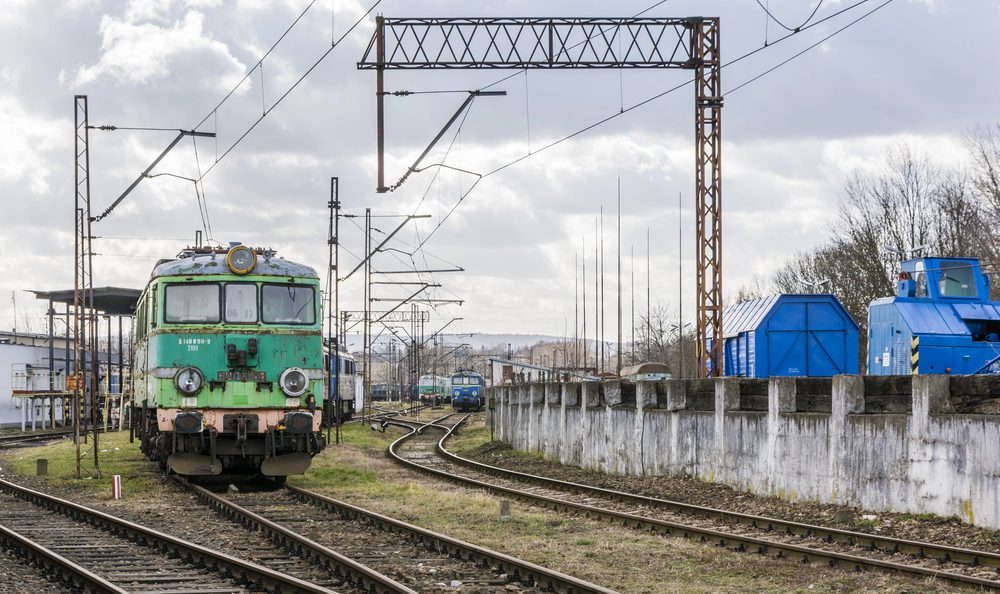
A shipment is sitting at the interchange, your facility’s operations are backing up, and the serving railroad has just flagged a section of your spur out of service. Now comes the question nobody thought to answer before this moment: whose job was it to keep that track in shape? Yours? The railroad’s? Something split between both parties under an agreement nobody has looked at in a decade?
Rail spur maintenance responsibility is one of the most consistently misunderstood areas in industrial rail operations. We’ve seen it play out across Kentucky, Illinois, and Tennessee in manufacturing facilities, chemical plants, agricultural terminals, and logistics hubs, and the pattern is almost always the same: maintenance gets deferred because accountability is unclear, and by the time a real problem surfaces, the costs and operational consequences are far larger than they needed to be. This affects safety, regulatory compliance, and the movement of freight through your facility, so here’s a grounded picture of where your obligations begin and what it takes to meet them.
Ownership Is the Starting Point for Every Maintenance Question
Before any conversation about maintenance responsibility can be productive, you need to know who owns the track. That single fact determines almost everything else, and it’s more complicated than it might appear.
Industrial rail spurs generally fall into one of three ownership categories. The first is a Class I railroad, one of the major national carriers that owns and operates the lead track and, in some cases, the spur itself up to or into an industrial facility. The second is a short-line or regional railroad, a Class II or Class III carrier that may own the connecting infrastructure and serve the facility under its own operating authority. The third is the industrial facility itself, which owns the spur outright and is entirely responsible for its condition.
The ownership structure determines who carries the maintenance obligation, who faces regulatory scrutiny, and who bears the financial exposure when something goes wrong. A facility that leases a spur from a Class I carrier operates under very different conditions than one that holds the deed to its own trackage. Neither arrangement is inherently better, but both require a clear-eyed understanding of what the facility has actually agreed to.
This is where spur agreements and trackage rights agreements matter enormously. When a railroad serves an industrial facility, a formal agreement typically defines the interchange point, the precise location where the railroad’s responsibility ends and the facility’s begins. Everything on the facility’s side of that point is generally the facility’s problem to manage and fund. Everything on the railroad’s side belongs to the carrier.
The challenge is that these agreements vary widely. Some place the full maintenance burden on the facility from the interchange point inward. Others divide responsibilities by the type of work involved. Some let the railroad perform maintenance and bill the facility, and some older agreements contain language nobody has reviewed or renegotiated in years, leaving the facility operating under obligations it may not fully understand.
We regularly encounter facilities that inherited spur agreements from previous operators or ownership groups. The physical infrastructure changed hands, but the agreement stayed in place. The current team has never read it carefully, and nobody has mapped the interchange point on the ground. When a maintenance dispute or a regulatory inspection arises, that lack of awareness becomes an immediate liability.
The first step in any serious approach to rail spur maintenance is pulling the governing agreement, identifying the interchange point, and understanding exactly what your facility is obligated to maintain. That document is the foundation for everything that follows.
What Federal Regulations Actually Require of Spur Owners
Once ownership and agreement terms are clear, the next layer of accountability comes from federal regulation. The Federal Railroad Administration governs track safety standards under 49 CFR Part 213, and those standards apply broadly to track used in railroad operations. How the rules apply to your specific spur depends on how the track is classified and used.
Many industrial spurs operate as Class 1 track under the FRA’s classification system. Class 1 is the lowest classification, permitting operating speeds up to 10 mph. The standards for Class 1 track are less stringent than those for higher-speed mainline track, but they aren’t optional. They set minimum requirements for rail condition, track geometry, tie integrity, fastener performance, and gage, and they carry real enforcement weight.
Some spurs used exclusively for switching within an industrial facility, with no direct connection to the general rail network, may fall outside FRA jurisdiction in certain operational contexts. This is a nuanced distinction, and facilities sometimes misapply it in ways that create regulatory exposure. If you aren’t certain your spur falls under FRA oversight, that question deserves a direct answer from a qualified railroad professional, not an assumption.
For spurs subject to FRA jurisdiction, regulatory responsibility follows the party that owns or exercises operational control over the track. This distinction matters: a freight customer using a spur to receive shipments isn’t responsible for the track’s compliance just because their cars move over it. Responsibility attaches to ownership and control, not to the movement of freight.
In practical terms, FRA compliance for an industrial spur means maintaining adequate track geometry, keeping ties in serviceable condition and properly spaced, confirming fasteners are secure and doing their job, and keeping rail free of defects that compromise safety. Grade crossing safety is governed separately under 23 CFR Part 646 and involves coordination with state departments of transportation.
State-level requirements in Kentucky, Illinois, and Tennessee add another layer. State rail safety programs often work in coordination with the FRA and may conduct their own inspections of industrial spurs, so facilities in this region should treat state inspectors as active participants in oversight rather than a secondary concern.
The core principle is simple: if you own or control the track, you’re responsible for its compliance. Ignorance of the applicable standards isn’t a defense in a regulatory proceeding, and it’s certainly not a defense when a safety incident occurs on track that should have been maintained.
The Maintenance Work That Keeps a Spur Operational
Knowing who’s responsible is only half the equation. The other half is what responsible maintenance actually looks like on the ground. Rail spur maintenance isn’t a single task or an annual event; it’s an ongoing program of inspection, assessment, and intervention that keeps the track safe, compliant, and capable of handling its loads.
Track inspection is the starting point for everything else. Regular inspections by qualified personnel who know what they’re looking for provide the baseline data that drives every other maintenance decision. An inspection that simply confirms the track looks intact from a distance isn’t enough. A proper inspection evaluates rail condition, tie condition and spacing, fastener integrity, track geometry including gage and surface, and the condition of any grade crossings, with results documented in a way that creates a defensible maintenance record.
Tie replacement is one of the most consequential ongoing maintenance activities on any spur. Ties degrade through weathering, mechanical loading, and biological decay. As they deteriorate, they lose their ability to hold spikes and maintain gage, and track geometry starts to suffer. A handful of defective ties in a section becomes a systemic problem if replacement gets deferred, and replacing a modest number of ties on a planned schedule costs a fraction of rebuilding a section that deteriorated past the point of repair.
Surface and alignment corrections address the geometry of the track itself. Over time, track develops surface irregularities, low joints, and alignment deviations that create rough running conditions and accelerate wear on both the track and the rolling stock using it. Surfacing and lining work, often performed with specialized on-track equipment, restores geometry and extends the service life of the track structure.
Fastener integrity gets less attention than ties and geometry, and it shouldn’t. Loose or missing spikes, deteriorated rail anchors, and failing joint bars all compromise structural performance. A fastener inspection program that catches these issues before they spread is a straightforward, cost-effective part of any maintenance plan.
Grade crossing renewal deserves particular emphasis because it carries its own distinct obligations. A grade crossing isn’t just a section of track that happens to intersect a road; it’s a regulated interface between rail and highway infrastructure with its own safety standards and coordination requirements. Crossing panels deteriorate, surface conditions degrade, and the crossing structure needs periodic renewal. Deferring that work creates hazards for both rail and highway users and invites scrutiny from both transportation authorities. Our grade crossing renewal work is a distinct service precisely because the obligations involved are distinct from general track maintenance.
Minor issues don’t stay minor. A few deteriorated ties become a failed section, a loose fastener becomes a joint failure, a rough crossing becomes an impassable one. Acting early, on a planned schedule, always costs less and disrupts less than responding to a crisis.
When Responsibility Is Shared Between the Railroad and the Facility
Not every spur involves a single responsible party. Many industrial facilities operate under arrangements where the serving railroad and the facility split responsibility for different portions of the track or different categories of work. These shared arrangements are common, and they’re also a frequent source of confusion and dispute.
The most typical arrangement is a clean geographic division: the serving railroad owns and maintains the lead track up to the interchange point, and the facility takes responsibility from that point inward. In theory this is simple. In practice, the interchange point is sometimes poorly documented, and the condition of the track at the handoff can become contentious when maintenance issues arise near the boundary.
Joint maintenance agreements add complexity. Some specify that certain work, like major surfacing or rail replacement, will be performed by the railroad and billed back to the facility. Others require the facility to use railroad-approved contractors. When maintenance standards differ between the parties, or one believes the other isn’t meeting its obligations, disputes develop quickly and strain the operating relationship.
Facilities served by short-line or regional railroads often have a more direct and negotiable relationship than those served by Class I carriers. Short-line operators typically have smaller territories, closer customer relationships, and more flexibility in structuring maintenance responsibilities. A facility with a productive working relationship with its short-line carrier can often negotiate arrangements that reflect what each party can practically handle.
Class I carrier agreements tend to be more standardized and less open to negotiation. The carrier’s standard spur agreement language often places heavy maintenance obligations on the facility with limited room for modification. Facilities in that situation should at minimum understand exactly what those obligations are and build their maintenance programs accordingly.
In either case, the facility’s best protection is a well-documented maintenance record and a clear understanding of where its responsibility begins. When disputes arise, the party with better documentation and a demonstrated history of proactive maintenance stands in a far stronger position than the party hoping the issue falls on the other side of the interchange point.
Building a Maintenance Program That Actually Works
The facilities that avoid costly disruptions and regulatory problems are the ones that have translated their obligations into an active program with a real schedule, real documentation, and real contractor relationships in place before problems arise.
A proactive program starts with a baseline condition assessment. A qualified track inspector walks the spur, documents tie conditions, identifies fastener deficiencies, evaluates track geometry, and assesses the grade crossings. That assessment becomes the starting point for a prioritized work plan.
From there, the program needs scheduled inspection intervals matched to traffic level and track condition. A spur handling heavy unit train traffic needs more frequent attention than one that sees a few car spots per week. The schedule should be documented, and each inspection’s results recorded to build a usable maintenance history over time.
Planned replacement cycles for ties and fasteners are a core element of any sustainable program. Rather than waiting for ties to fail, a planned cycle identifies sections approaching end of life and addresses them on a schedule that allows proper planning and cost management. The same logic applies to fasteners and joint bars.
For facilities without in-house railroad expertise, turnkey project management offers a practical path. A turnkey contractor handles inspection, repair planning, work execution, and compliance documentation under a single coordinated relationship, taking the coordination burden off the facility and putting the work in the hands of people who understand both the technical requirements and the regulatory framework.
Perhaps the most important element: have a vetted railroad maintenance contractor identified and under contract before an emergency occurs. When a spur gets flagged out of service, the clock starts immediately. Facilities scrambling to find qualified help at that moment face longer downtime, higher emergency rates, and less control over the work. Facilities with a contractor relationship already in place mobilize quickly and get back to operations far sooner. We’ve seen both scenarios play out, and the difference in outcomes is stark. A maintenance program doesn’t need to be elaborate to work. It needs to be consistent, documented, and supported by people who know what they’re doing.
Your Next Steps Toward a More Secure Rail Operation
Responsibility follows ownership and agreement, and not knowing what you own or what you’ve agreed to is not a defense. Regulatory inspectors don’t accept it, and the track doesn’t care about it either. Deferred maintenance on a rail spur doesn’t pause while ownership questions get sorted out. It compounds.
At Track Tech Inc., we’ve worked with industrial rail operators across Kentucky, Illinois, and Tennessee for more than 30 years, from high-volume manufacturing spurs to lower-traffic agricultural and logistics facilities. We understand the regulations, the physical demands of spur maintenance, and the practical realities of keeping rail infrastructure operational in an industrial environment. If you need a baseline condition assessment, a turnkey maintenance program, or help working through the obligations in your spur agreement, reach out to discuss your spur. The earlier we get involved, the more options you have.