Book a Consultation
Classifications and Credentials:


What Does a Railroad Ballast Do and What Happens When It Fails?
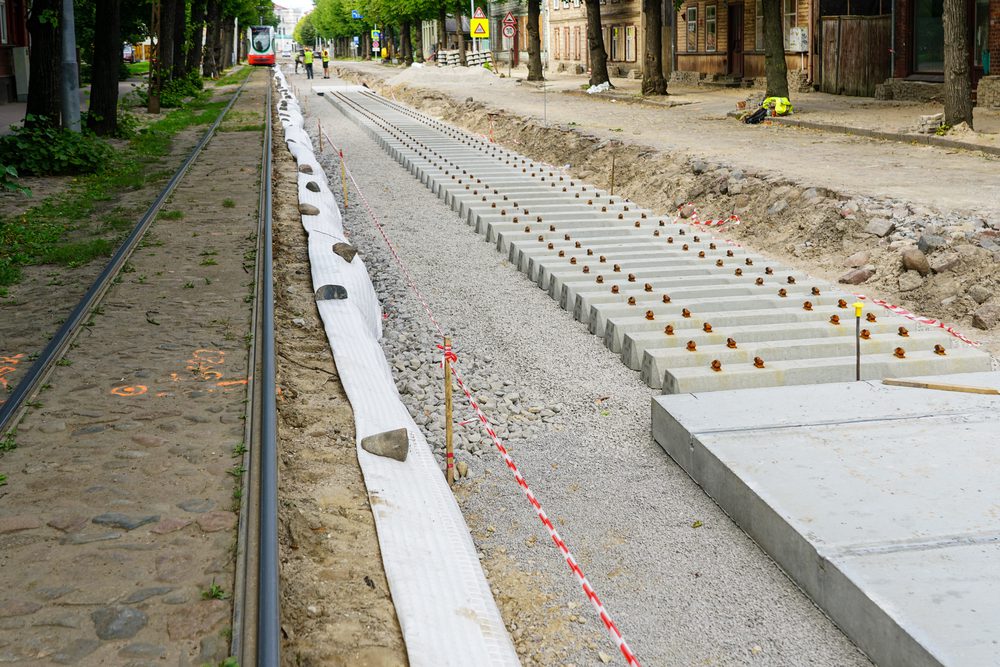
If you’ve ever looked at a railroad track and wondered why all that crushed rock is piled underneath and around the ties, you aren’t alone. That layer of stone is called railroad ballast, and it’s one of the most important parts of any track structure. Without it, rails would shift under the weight of passing trains, water would pool beneath the ties, and the whole track would deteriorate far faster than it should.
We work on railroad infrastructure every day and see firsthand what happens when ballast is in good shape and what goes wrong when it isn’t. It’s the kind of thing most people never think about until a problem shows up, and by then the track may already need serious repair. Here’s what railroad ballast does, how it supports safe and reliable train operations, and what happens when it starts to break down.
The Foundation Beneath the Rails
Railroad ballast is the layer of crushed stone between the subgrade (the ground beneath the track) and the railroad ties. Most ballast is hard, angular rock such as granite, trap rock, or quartzite. The angular shape matters because it lets the stones lock together and resist movement, which is exactly what you need under thousands of tons of rolling freight.
The ballast bed typically runs 12 to 18 inches deep beneath the ties, varying with track class and the loads it carries. On top of the subgrade there’s often a layer of sub-ballast, a finer material that adds drainage and helps keep the subgrade stable. The main ballast sits above that, cradling the ties and holding them in position.
When we build or rehabilitate track, ballast quality is one of the first things we evaluate. Stone that’s too rounded, too soft, or too small won’t perform the way it needs to. Good railroad ballast holds its shape under load, drains water quickly, and gives our crews a solid working surface for routine track maintenance down the road.
Why Clean Ballast Keeps Trains Running Safely
Ballast does several jobs at once, and when any of them stops working, the consequences show up fast.
First, it distributes the weight of passing trains. When a loaded railcar rolls over a section of track, that force travels down through the rail, into the tie, and then into the ballast, which spreads the load across a wider area so the subgrade below doesn’t get crushed or deformed. Without adequate ballast, ties punch down into the ground under heavy traffic and the track surface goes uneven in short order.
Second, it drains water away from the ties and subgrade. Water is one of the biggest enemies of railroad track. Pooling beneath the ties, it softens the subgrade, accelerates tie rot, and creates conditions where the track can shift or settle unevenly. Clean, well-graded ballast moves water away quickly and keeps the foundation dry and stable.
Third, it resists lateral and longitudinal forces. Trains don’t just push straight down. They push sideways on curves and along the rail during braking and acceleration. The ballast holds the ties in place against all of it, which is what keeps the track in proper gauge and alignment.
Finally, ballast allows adjustments during surfacing work and track inspections. Because the stones are loose and compactable, maintenance crews can raise, lower, or shift the track during routine surfacing to correct geometry issues before they grow.
How the Ballast Bed Actually Works
The mechanics come down to three principles: interlocking, friction, and drainage.
When angular stones are tamped beneath a tie, they wedge against each other and form a dense, stable mass. That interlocking gives ballast its load-bearing strength. Round or smooth stones would simply roll past each other and offer almost no resistance, which is why proper specifications call for hard, angular, uniformly sized stone.
Friction between the stones and the ties keeps the track from sliding or shifting. Every train passage creates small forces trying to push the track out of position, and friction resists them. This matters most on curves and grades, where the forces are stronger and more constant.
Drainage works because of the voids between stones. Water flows downward through those gaps and away from the ties and subgrade. When ballast is clean and free of fine material, the voids stay open and water passes through freely. When dirt, coal dust, degraded stone fragments, or other contaminants fill them, drainage stops. That’s when problems begin and the early signs of a failing ballast bed appear.
What Happens When Railroad Ballast Breaks Down
When ballast deteriorates, the consequences show up in several ways, none of them easy or cheap to fix after the fact.
The most common failure is fouling: ballast contaminated with fine material like mud, sand, coal dust, or fragments from the stone itself wearing down over time. Once fines fill the voids, the ballast loses its ability to drain and starts behaving more like compacted dirt than structural stone.
After drainage fails, water sits against the ties and subgrade. Wooden ties rot faster. The subgrade softens and loses bearing capacity. The track settles unevenly, creating low spots, rough ride quality, and eventually geometry defects that can trigger slow orders or service interruptions.
You may also see pumping, where water and mud get forced up through the ballast under train weight. That’s a clear sign the subgrade has been compromised and the ballast is no longer doing its job. In severe cases the track develops a mud hole, which takes major excavation and reconstruction to repair.
Fouled ballast also makes routine work harder. Tamping machines can’t compact contaminated ballast properly, and inserting new ties into a fouled bed doesn’t solve the underlying drainage problem, so replacement ties set into bad ballast deteriorate faster than they should.
Restoring Ballast Through Tamping, Surfacing, and Undercutting
Maintaining healthy ballast isn’t a one-time task. It takes ongoing attention and, at different intervals, different levels of work.
Ballast tamping is the most routine form. A tamping machine inserts vibrating tines into the ballast beneath each tie and compacts the stone into a uniform, tightly packed bed, restoring proper track surface and cross-level geometry. We typically tamp as part of broader surfacing programs that correct the alignment, profile, and elevation of the track.
Surfacing goes hand in hand with tamping. During a surfacing program the track is lifted to its proper elevation, fresh ballast is added where needed, and the tamper packs it into place. It’s one of the most effective ways to address minor settlement, rough ride, and geometry deviations before they become larger problems.
When ballast is too contaminated to function, the answer is undercutting: removing the old ballast down to the subgrade, cleaning or replacing the stone, and rebuilding the bed from the bottom up. Undercutting costs more and disrupts more than tamping, but it’s the only real fix for severely fouled ballast. Tamping or surfacing over heavily contaminated stone is a temporary measure at best.
Sometimes adding ballast to the shoulders and cribs around the ties improves drainage and stability without a full undercut. Every track is different, and we evaluate conditions on site before recommending an approach. Our full range of rail services covers everything from routine surfacing to complete track rehabilitation, and we always start by understanding what the ballast is telling us about the health of the track.
How Regular Inspections Catch Ballast Problems Early
The best way to stay ahead of ballast failure is catching it before it progresses, which means including ballast condition in your inspection routine rather than looking only at rails and ties.
During a walking inspection, several things point to trouble. Standing water in the cribs or along the shoulders usually means drainage is compromised. Mud staining on the ties or ballast surface signals pumping and fouled stone beneath. If the track feels soft or spongy underfoot, or you can see settlement in certain spots, the ballast bed has likely lost its structural integrity there.
We look at the ballast profile too. Eroded shoulders, cribs between ties that aren’t adequately filled, or ballast that has migrated away from where it belongs all need attention. Catching these during a routine track inspection cycle always costs less than waiting until the track surface shows defects that affect operations.
For facilities and short line operators without a formal inspection program, setting one up is one of the highest-value steps available. Even a simple quarterly walk of your track, paying attention to ballast condition, drainage, and tie health, will surface problems while they’re still manageable.
Keeping Your Track on Solid Ground
Railroad ballast may not be the most visible part of your track, but it’s one of the most important. Clean, well-graded stone keeps the track stable, drains water away from ties and subgrade, and gives your maintenance crews a solid foundation to work with year after year.
When ballast fails, the problems compound. Drainage issues lead to subgrade failure, which leads to geometry defects, which leads to slow orders and emergency repairs. Catching problems early through regular inspection and staying ahead of them with proper tamping, surfacing, and undercutting is the cheapest way to manage track infrastructure over the long term.
At Track Tech Inc., we handle every phase of ballast and track maintenance, from initial assessment to full rehabilitation. If your track is showing signs of ballast failure, or it’s been a while since your last surfacing program, reach out to our team and we’ll put together a plan that fits your operation and your budget.