Book a Consultation
Classifications and Credentials:


How Long Does Railroad Track Last? Rail Lifespan by Traffic, Load, and Maintenance
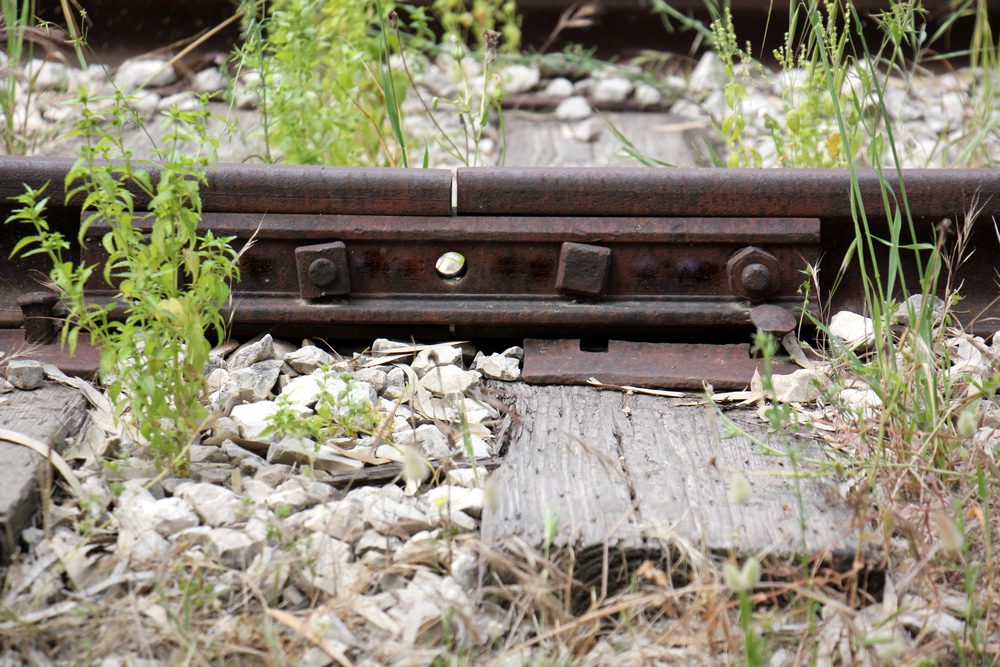
One of the most practical questions anyone managing rail infrastructure can ask is how long railroad track lasts. The answer isn’t a single number, because rail lifespan depends on far more than the type of steel in the ground. Traffic volume, axle loads, curve geometry, climate, and the quality of your maintenance program all shape how many years, or how many million gross tons, you get before replacement becomes necessary.
We’ve built and maintained track across a wide range of operating environments, from high-tonnage industrial spurs handling unit trains to lightly used sidings carrying a few cars per week. In every case, the relationship between how hard the track works and how much effort goes into keeping it in good condition determines how long the rail actually lasts.
If you’re planning capital expenditures, scheduling a rail replacement program, or trying to understand when your track might need attention, here’s what drives railroad rail wear and how to get the most service life out of your investment.
What Determines Rail Lifespan in the First Place
Rail lifespan varies widely with operating conditions. A piece of 136-pound rail on a well-maintained Class I mainline might carry 700 million gross tons or more before it comes out. A lighter rail section on a low-traffic industrial siding might last 30 or 40 years on modest tonnage simply because it isn’t being worked as hard.
The weight of the rail itself is one factor. Heavier sections like 136 RE or 141 RE have more steel in the head, meaning more material available to wear before the rail reaches the end of its useful life. Lighter sections, such as 90-pound or 100-pound rail, wear through faster under the same traffic.
Steel type matters too. Standard carbon rail wears faster than head-hardened or premium alloy rail, which is engineered to resist wear and fatigue on heavy-haul corridors and sharp curves. Railroads choose rail grade based on expected tonnage and the operating conditions of each stretch of track.
Track geometry plays a role as well. Rail on curves wears faster than rail on tangent (straight) track because of the lateral forces from wheels navigating the curve. The tighter the curve, the faster the gauge face of the outer rail wears down, which is why you’ll often see newer or heavier rail on curves even when the tangent sections nearby have years of life left.
How Traffic Volume and Axle Loads Drive Wear
The biggest single factor in railroad rail wear is how much weight passes over the rail and how often. Rail life is often measured in million gross tons (MGT) rather than calendar years, because rail carrying 50 MGT annually wears out much faster than the same rail carrying 5 MGT, even if both were installed the same day.
Axle loads matter as much as total tonnage. Heavier cars produce more contact stress where the wheel meets the rail, accelerating both surface wear and internal fatigue. Rail carrying unit trains of loaded coal hoppers at 286,000 pounds per car accumulates damage far faster than the same rail under lighter mixed freight.
Speed contributes as well, though less directly than tonnage. Higher speeds increase dynamic forces at rail joints, turnouts, and other track features, accelerating wear at those specific locations. On open tangent track, speed affects rail head wear less than tonnage does, but on curves and at special trackwork the impact is more pronounced.
For facility owners and short line operators trying to gauge their own situation, the starting point is understanding your traffic profile. If you know your annual tonnage, typical car weights, and track geometry, you can build a reasonable estimate of remaining rail life. Regular track inspections verify those estimates by measuring actual wear against known thresholds and catching problems before they become failures.
How Maintenance Practices Extend the Life of Your Rail
Good maintenance doesn’t just keep trains running safely today. It directly extends how long your rail lasts, and the gap between well-maintained and neglected track can be measured in years of additional service.
Rail grinding is one of the most effective practices for prolonging lifespan. Grinding removes small surface defects and reshapes the rail head to its proper profile, reducing contact stress and slowing the development of fatigue cracks. Railroads that grind on a regular cycle consistently get more tonnage out of each rail than those that skip or delay it.
Proper track maintenance protects rail indirectly too. Clean ballast, ties in good condition, and geometry within specification mean the rail is supported evenly along its length. When ties deteriorate or ballast fouls, the track settles unevenly and the rail absorbs repeated shock loads it was never designed to handle. Those dynamic impacts accelerate fatigue and can cause internal defects well before the rail wears out at the surface.
Lubrication on curves is another proven strategy. Applying lubricant to the gauge face of the high rail cuts friction between the wheel flange and the rail, slowing gauge face wear dramatically. Lubricated curves often see two to three times the rail life of unlubricated curves with similar traffic.
Tie condition has a direct effect as well. Worn or missing ties let the rail deflect more under load, increasing bending stress and speeding the formation of fatigue defects. Keeping your ties in good shape is one of the cheapest ways to protect your rail investment long term.
Recognizing Railroad Rail Wear Before It Becomes a Problem
Even with excellent maintenance, every rail eventually reaches the end of its life. Spotting wear early gives you time to plan a replacement on your terms rather than reacting to a failure.
Rail wear is measured in several ways. The most straightforward is head wear, the loss of vertical height from the top of the rail. FRA track safety standards set head wear limits based on rail weight and track class, and once rail passes those thresholds it must be replaced or the track class and allowable speed must be reduced.
Gauge face wear is the other primary measurement, particularly on curves. As the inside face of the outer rail wears from wheel flange contact, the rail thins and eventually can’t safely carry traffic. Combined head and gauge face wear limits appear in railroad engineering standards, and exceeding them is grounds for replacement.
Beyond surface wear, rail develops internal defects from fatigue. Transverse defects, detail fractures, and shelling are all forms of internal damage that may be invisible from the surface but can cause the rail to break under load. That’s why regular rail flaw detection using ultrasonic testing belongs in any rail management program and in a thorough inspection program.
Visible signs of wear and fatigue include head checking (fine surface cracks along the rail head), flaking or shelling on the gauge corner, corrugation (a wavy pattern on the running surface), and battered or crushed rail ends at joints. When these show up consistently, it’s time to evaluate if the rail has enough remaining life to justify continued service or if replacement is the smarter investment.
Knowing When to Replace Rail
The decision comes down to balancing safety, operating requirements, and cost. No single trigger point applies to every situation, but a few indicators put replacement squarely on the table.
If your rail has worn past the FRA limits for your track class, replacement isn’t optional. You either replace the rail or downgrade the track class, which usually means slower trains and may affect your ability to handle certain traffic.
If flaw testing is turning up a rising number of internal defects, the rail is telling you it’s near the end of its fatigue life. Spot replacement of individual defective rails buys time, but when defects appear frequently across a stretch of track, a programmed rail replacement costs less than chasing individual failures.
If maintenance costs are climbing because the rail no longer holds surface, grinding is producing diminishing returns, or repairs are outrunning what replacement would cost, that’s another strong signal. Rail past its useful life costs you money every month it stays in the ground through added maintenance, slower speeds, and higher risk.
We work with operators to evaluate rail condition and build replacement plans that fit both operating needs and budget. In many cases, used relay rail from heavier-traffic lines can go into lighter-traffic track at a fraction of the cost of new rail, extending the value of the steel and giving our clients a practical path forward without a full capital outlay.
Getting the Most Life Out of Your Track
How long does railroad track last? It depends as much on how you manage the track as on the steel itself. Rail that’s properly supported, regularly inspected, and maintained on a consistent schedule will outperform identical rail that’s neglected, often by a wide margin.
The approach for extending rail lifespan is straightforward. Keep your ballast clean and properly graded. Replace deteriorated ties before they compromise rail support. Lubricate your curves. Schedule regular inspections to catch wear and defects early. And when the numbers say it’s time for rail replacement, plan it proactively instead of waiting for a failure to force your hand.
At Track Tech Inc., we work with rail operators across Kentucky, Illinois, Tennessee, and beyond to build and maintain track that performs for the long haul. If you need a rail condition assessment, a maintenance program, or a full rail replacement project, reach out to our team and we’ll put together a plan that protects your track and your bottom line.