Book a Consultation
Classifications and Credentials:


What Is the Best Railroad Construction Contractor for Track Maintenance?
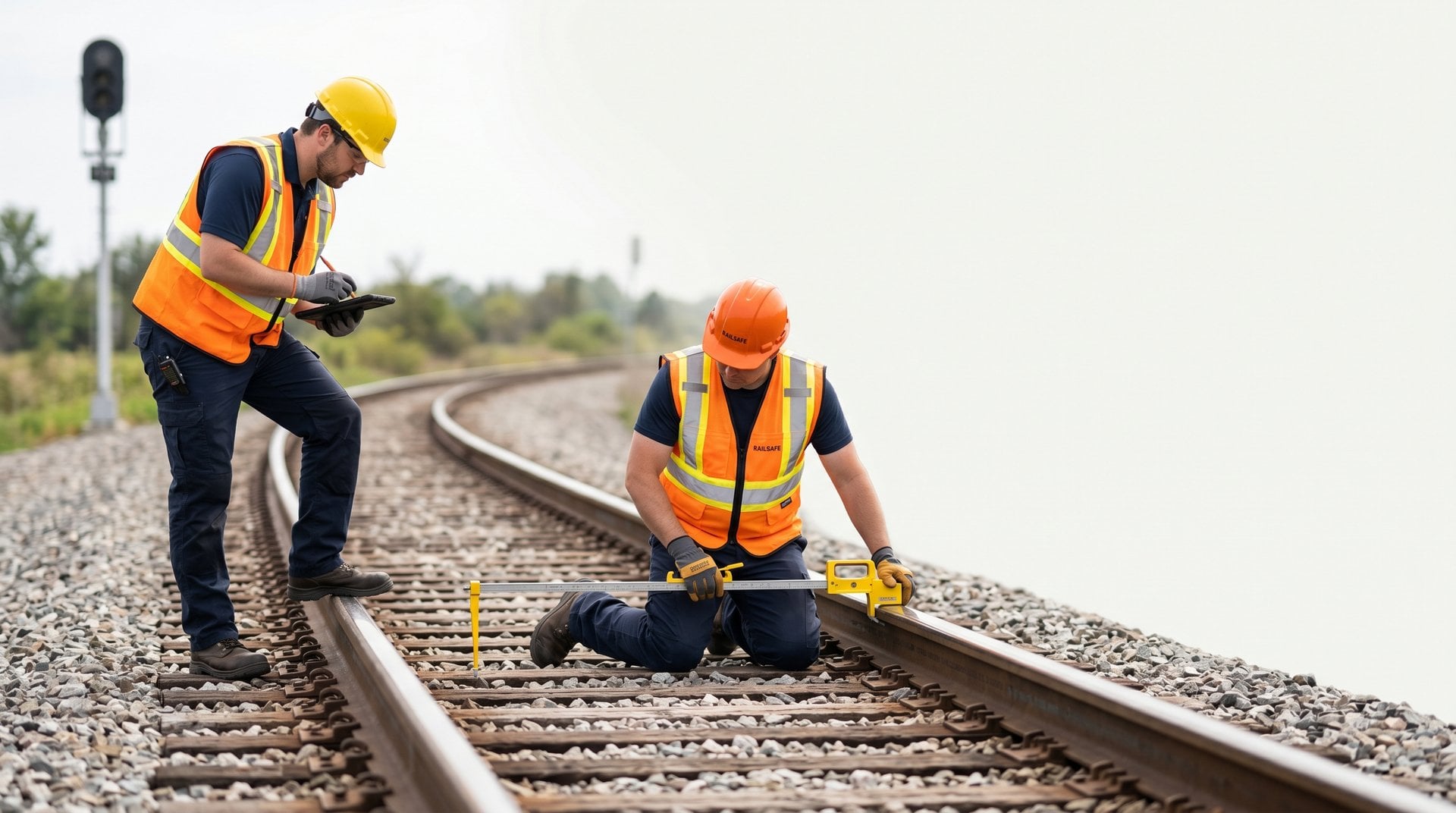
Choosing the wrong railroad construction contractor does not just create inconvenience. It creates liability. When a poorly qualified crew mishandles track geometry corrections or skips proper ballast compaction, the consequences show up months later as accelerated wear, FRA compliance violations, and unplanned service interruptions that cost far more than any initial savings from a lower bid. For rail operators managing active freight corridors, industrial spurs, or transit infrastructure, the contractor decision is one of the most consequential choices in the maintenance cycle.
The instinct to prioritize the lowest bid is understandable, especially when budgets are tight and project timelines are pressing. But track maintenance is not a commodity purchase. The quality of work performed today determines the condition of your infrastructure for years. A contractor who cuts corners on tie replacement or surface alignment creates a compounding problem that grows with every loaded car that rolls over that section.
This guide is designed to help rail operators, system owners, and transportation managers evaluate contractors with clarity. We will walk through what separates genuinely capable contractors from those who simply have the right paperwork, what questions to ask before signing anything, and why regional knowledge and safety culture belong at the top of your evaluation criteria, not at the bottom.
Why Contractor Selection Shapes Your Infrastructure for Years
Track maintenance is not a project with a clear beginning and end. It is an ongoing commitment to the structural integrity of a system that operates under constant stress from load cycles, weather, and thermal expansion. The contractor you bring in for a tie replacement program or a surface correction job is not just completing a task. They are setting the baseline condition your track will be measured against for the next inspection cycle and beyond.
When a contractor lacks genuine technical depth, the problems do not always surface immediately. Substandard ballast tamping, incorrect rail fastener torque, or improper drainage grading can pass a visual check but fail under repeated load. By the time the deficiency becomes obvious, you are dealing with a track geometry deviation that requires emergency correction, a compliance finding from an FRA inspection, or worse, an incident report.
Recurring re-work is one of the clearest signals that a contractor was underqualified for the job. What looks like a cost-saving decision at the bid stage often turns into two or three return visits to fix work that should have been done correctly the first time. Each return visit brings its own mobilization cost, track possession window, and operational disruption. The cumulative expense typically far exceeds the difference between the lower bid and a more experienced contractor’s proposal. Understanding the hidden costs of neglecting railroad track maintenance is essential before any contractor decision is made.
The right contractor brings institutional knowledge that goes beyond general construction competence. They understand the relationship between track class, allowable operating speed, and the maintenance intervals required to keep that classification valid under 49 CFR Part 213. They know how your specific load demands affect tie wear rates, how your local soil conditions influence ballast drainage, and what your track’s history tells them about where problems are likely to develop next. That kind of contextual understanding is not something a contractor can fake, and it makes a measurable difference in the quality and durability of the work they deliver.
Selecting a contractor is, in practical terms, selecting a long-term partner in your infrastructure’s performance. The decision deserves the same level of scrutiny you would apply to any other major capital commitment.
Core Qualifications That Separate Capable Contractors from the Rest
Experience is the most reliable leading indicator of contractor competence, but it needs to be the right kind of experience. Years in business matter less than the breadth and complexity of the project portfolio behind them. A contractor who has spent decades working exclusively on low-tonnage industrial spurs may not have the technical depth to manage a high-density freight mainline maintenance program. Ask for a documented project history that includes track class, tonnage demands, and the specific scope of work performed.
FRA compliance knowledge is non-negotiable. The Federal Railroad Administration’s track safety standards under 49 CFR Part 213 define six track classes, each with different allowable speeds, geometry tolerances, and inspection frequencies. A contractor who does not understand which class applies to your territory, or what maintenance intervals are required to maintain that classification, is a liability from the moment they arrive on site. Understanding the difference between Class I, Class II, and Class III track standards is foundational to evaluating whether a contractor truly knows the regulatory environment they are working in.
Full-service capability is another qualification that deserves serious weight. Track maintenance rarely exists in isolation. A surface correction project often reveals tie deterioration that needs addressing. A grade crossing renewal may expose alignment issues in the adjacent tangent. A contractor who can only handle one piece of the work forces you into a coordination role you should not have to play, managing handoffs between multiple vendors, each with their own mobilization schedules, liability boundaries, and quality standards.
The services that matter most include track inspection, tie replacement, ballast work, surface and alignment corrections, turnout installation and maintenance, and grade crossing upkeep. When evaluating what a contractor can actually deliver, it helps to understand what services full-service railroad construction contractors provide so you can measure any candidate against a complete standard. When critical work gets subcontracted, accountability diffuses quickly, and the owner typically absorbs the risk when something falls between the cracks.
Equipment ownership is another practical qualifier. Contractors who own their tampers, ballast regulators, and on-track vehicles are not dependent on rental availability or third-party scheduling. They can respond faster, mobilize more reliably, and exercise direct quality control over the equipment performing the work. Contractors who rely heavily on rented equipment introduce scheduling variables that can compress your work windows and extend project timelines in ways that are difficult to anticipate at the bid stage.
Safety Culture as a Hiring Criterion, Not an Afterthought
On-track safety is federally regulated under 49 CFR Part 214, which establishes roadway worker protection requirements including on-track safety programs, flagging protocols, and the qualifications required for personnel working in and around active track. A contractor’s compliance with Part 214 is not optional, and it is not something you should take on faith based on a verbal assurance during a bid meeting.
The way a contractor manages on-track safety is a direct reflection of how they manage risk across every dimension of their operation. A crew that cuts corners on flagging procedures is likely cutting corners elsewhere. Weak safety culture does not stay contained to one aspect of a job. It permeates the whole operation, and the consequences can range from a near-miss incident to a serious injury, an equipment collision, or a regulatory enforcement action that shuts down your project mid-execution.
When evaluating a contractor’s safety culture, ask specific questions rather than accepting general assurances. Ask how they structure on-track safety and flagging services for each job type, what their process is for establishing and communicating protection limits, and whether they maintain certified flagging personnel on every active project. Ask about their incident history, not just the number of incidents but how they responded, what corrective actions they implemented, and whether those actions demonstrably changed their procedures going forward.
FRA inspection and incident data is publicly available, which makes safety record verification one of the most objective filters you can apply during contractor evaluation. A contractor with a clean, verifiable safety history is demonstrating something real. A contractor who cannot provide clear answers about their safety program or who deflects questions about incident history is telling you something important about how they operate.
Certified flagging personnel are a minimum requirement, not a differentiator. The differentiator is whether safety is genuinely embedded in how the contractor plans and executes work, or whether it is treated as a compliance checkbox. That distinction becomes clear when you ask about job briefing procedures, how they handle unexpected track occupancy conflicts, and what their protocol is when conditions on site deviate from what was planned. The answers reveal whether safety is a culture or a formality.
Regional Knowledge and Project Scope: Why Both Matter More Than You Think
A contractor who has spent years working in Kentucky, Illinois, and Tennessee understands operating conditions that a contractor based outside the region simply cannot replicate from a project spec sheet. The clay-heavy soils common in parts of Kentucky and Tennessee affect ballast drainage in ways that demand specific material selection and grading approaches. Illinois freeze-thaw cycles create heave patterns that influence both the timing of maintenance work and the sequencing of surface corrections. These are not minor variables. They are factors that shape the durability of every maintenance decision made on a project.
Regional familiarity also means understanding the traffic patterns of the major freight corridors in the area. The mix of Class I, Class II, and Class III railroads operating across this three-state region, along with industrial spurs and transit infrastructure, creates a range of operating environments with very different maintenance demands. A contractor who has worked across this mix develops an intuitive understanding of how to plan work windows, manage track possessions, and coordinate with dispatchers in ways that minimize operational disruption.
Turnkey project management capability amplifies all of these advantages. When a single contractor handles construction, inspection, and compliance reporting under one contract, the gaps between project phases disappear. There is no handoff between a construction crew and an inspection team that operates under different quality standards. There is no ambiguity about who owns a deficiency found during post-construction inspection. Knowing what to expect during a turnkey railroad construction project timeline helps owners set realistic expectations and hold contractors accountable at every phase.
Contractors without full project scope capability may handle routine maintenance competently but lack the resources to manage multi-phase projects. When a job evolves mid-execution, as track projects often do, a limited-scope contractor becomes a bottleneck. You end up managing multiple vendors across a single job, absorbing the coordination risk that a turnkey contractor would have carried for you. That is a significant operational burden that rarely appears in a bid comparison but shows up clearly in project execution.
Questions to Ask Before Signing Any Contract
The bid document tells you what a contractor is proposing to do and at what price. The conversation before you sign tells you whether they are actually capable of doing it well. There are specific questions that separate contractors who understand your needs from those who are simply competing for the work.
Request references from comparable operations. General testimonials are not useful. Ask for references from operators running similar track classes and tonnage demands to your own. A contractor who has successfully maintained Class 4 freight mainline track has demonstrated something different from one whose portfolio consists primarily of low-speed industrial spurs. The reference conversation should cover not just whether the work was completed but how the contractor handled complications, communicated during the project, and stood behind their work when issues emerged after completion.
Ask directly about how they handle scope changes and delays. Track maintenance projects encounter unexpected conditions regularly. Subgrade problems, hidden joint deterioration, and weather delays are not unusual. Knowing the signs your railroad track needs immediate attention can help you anticipate scope changes before they become surprises during execution. A contractor who has clear, fair processes for managing changes and who communicates proactively when conditions shift is far preferable to one who treats every deviation as a renegotiation opportunity.
Understand the in-house versus subcontracted breakdown. This question is critical. Ask specifically which services are performed by the contractor’s own crews with the contractor’s own equipment, and which are handed off to subcontractors. Subcontracting is not inherently problematic, but subcontracting critical work, such as track inspection, tamping, or on-track safety functions, dilutes accountability in ways that can be difficult to manage after the fact. If a subcontractor performs substandard work, the primary contractor’s leverage to correct it is limited once they have been paid and moved on.
Clarify inspection and documentation deliverables. A qualified contractor should be able to provide clear documentation of work performed, materials used, and post-work inspection results. Contractors who follow FRA inspection requirements for industrial rail track will already have systematic documentation processes in place. This documentation is not just good practice — it is your record of compliance with FRA track safety standards and your protection in the event of a future regulatory review or incident investigation.
Putting It All Together
The evaluation framework for selecting a railroad construction contractor comes down to five interconnected criteria: depth of experience across comparable track environments, genuine FRA compliance knowledge at the project execution level, a verifiable safety culture built on certified personnel and documented protocols, regional familiarity with the specific operating conditions of your territory, and full-service capability that eliminates coordination gaps across the scope of your project.
None of these criteria can be substituted by a lower bid price. The contractor who wins on price alone often costs more in the long run through re-work, compliance findings, project delays, and the operational disruption that follows from work that was not done correctly the first time. The best contractor is the one whose capabilities align precisely with the demands of your infrastructure and whose track record demonstrates they can deliver under real-world conditions.
We have been doing this work since 1980, and the foundation of everything we do is the understanding that track maintenance is a long-term commitment, not a transaction. Our services cover track maintenance, tie replacement, turnout installation, grade crossing renewal, catenary line installation, on-track safety and flagging, track inspection, and turnkey project management across Kentucky, Illinois, and Tennessee. We perform this work with our own crews and equipment, and we stand behind the results.
If you are evaluating contractors for an upcoming maintenance program or capital project, we would welcome the opportunity to discuss your specific infrastructure needs directly. Learn more about our services and reach out to the Track Tech Inc. team to start the conversation.