Book a Consultation
Classifications and Credentials:


Railroad Flagger Requirements: When Contractors Need Flagging Near Train Tracks
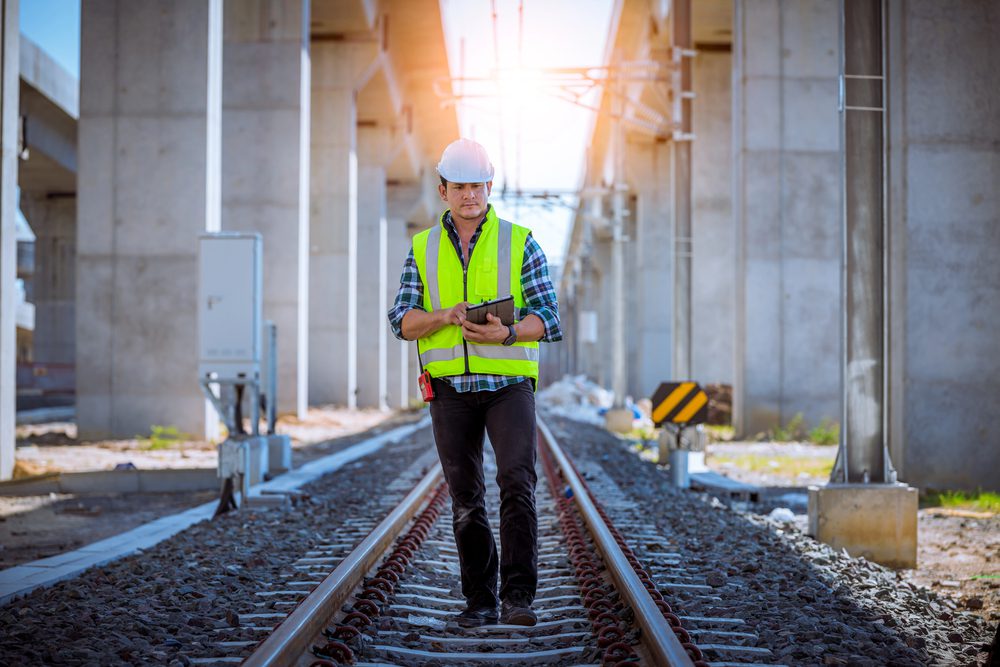
If you’re a contractor planning work near an active rail line, one of the first questions to answer is if you’re required to have a flagger on site. We hear it constantly, and the answer is almost always yes. Getting it wrong costs you anything from work stoppages and fines to serious safety incidents nobody wants on their record.
Railroad flagger requirements aren’t optional for anyone performing work near train tracks. Federal regulations, railroad policies, and basic jobsite safety all point the same direction: if your crew is going to be near or on an active rail line, qualified on-track protection needs to be in place before anyone sets foot on the right of way.
We’ve provided flagging and on-track safety services for projects of every size, from utility crossings and pipeline bores to large-scale construction along active corridors. Here’s what the federal regulations require, when flagging applies, what qualifications the job takes, and how to keep your project compliant and your people safe.
What a Railroad Flagger Actually Does on the Job
A railroad flagger is a trained individual who monitors train traffic and protects workers operating on or near active tracks. In principle the job is simple: watch for approaching trains, warn the crew, and make sure everyone is clear before a train passes.
In practice it involves far more than standing by the tracks and watching. A qualified flagger has to know railroad operating rules, communicate with train dispatchers, and establish and hold a safe zone for the work crew. They carry specific equipment, including a radio tuned to the railroad’s frequency, plus flags and signals for communicating with approaching trains.
Flagging is part of a broader framework called roadway worker protection. Under it, any time workers occupy or foul the track, meaning they’re close enough to be struck by a train or equipment, a qualified person must be responsible for their safety. Usually that person is a Roadway Worker in Charge, or RWIC, who either performs the flagging directly or oversees the protection plan for the entire work zone.
We staff qualified flaggers and RWICs through our on-track safety and flagging services, and we see how much the role matters every day on active job sites across the region.
Federal Rules That Govern Roadway Worker Protection
The regulatory backbone comes from the Federal Railroad Administration under 49 CFR Part 214, which establishes the rules for roadway worker protection and applies to anyone who goes on or near railroad tracks where train movements may occur.
The core principle: no one may foul a track unless on-track protection has been established. That protection takes several forms, including exclusive track occupancy, where train traffic is stopped or rerouted; foul time, a temporary block granted by the dispatcher; and watchman or lookout protection, where a trained person warns workers of approaching trains. Flagging falls into that last category and is the most common form of protection for contractors working near the tracks rather than directly on them.
Federal rules aren’t the whole picture. Individual railroads have their own operating rules and contractor safety programs, and many Class I and Class II railroads require contractors to complete a railroad-specific safety orientation before they’re allowed on the property at all. These requirements often exceed the FRA minimums, so coordinate with the railroad or a qualified track safety provider before your project begins.
Violations of roadway worker protection rules bring heavy fines, project shutdowns, and in the worst cases injuries or fatalities. The FRA takes enforcement seriously, and so do the railroads.
When Your Project Requires a Flagger on Site
You need a flagger any time your work puts people close enough to an active track that they could be struck by a train or on-track equipment.
The FRA defines the fouling zone as any area within four feet of the nearest rail, and some railroads extend that distance further. If any part of your equipment, material, or crew will be inside that zone, on-track protection has to be in place. That covers obvious situations like grading alongside a track, installing a utility crossing beneath a rail line, or performing bridge work over an active corridor.
Less obvious situations count too. Operating a crane near the tracks where the boom could swing into the fouling zone requires protection. Piling excavated material close to the rail requires protection. Even if your workers never stand on the track itself, the moment their activity brings them or their equipment within range, flagger requirements apply.
Certain project types almost always require flagging: pipeline and utility crossings, road and highway grade crossing work, drainage and environmental projects near rail corridors, bridge and overpass construction, and fencing or barrier installation along railroad right of way. If you aren’t sure your project qualifies, assume protection is needed and verify with the railroad rather than showing up on site without it.
RWIC Qualifications and Who Can Protect a Work Zone
Not just anyone can serve as a flagger or establish on-track protection. RWIC requirements are specific and have to be met before a person is authorized for the role.
An RWIC must complete training covering railroad operating rules, on-track safety procedures, and the specific requirements of the railroad whose property hosts the work. That training typically comes from the railroad itself or from an employer whose program meets the railroad’s standards. After training, the RWIC passes an examination and receives authorization from the railroad to serve.
The RWIC is personally responsible for the safety of every worker under their protection. They conduct a job briefing before work begins, define the limits of the work zone, establish the form of on-track protection in use, and confirm every crew member understands the safety plan. When conditions change during the day, the RWIC updates the briefing and adjusts the protection.
We invest heavily in training and certifying our flagging and RWIC personnel so they arrive at your job site fully prepared to take responsibility for on-track protection. This isn’t a role someone can fill without the proper credentials, however experienced they may be in other areas of construction or track work.
Common Mistakes Contractors Make Near Active Track
We’ve seen just about every mistake a contractor can make around railroad tracks, and the most common ones are entirely avoidable with a little planning.
Assuming low-traffic tracks don’t need protection is a frequent one. A train passing through once or twice a day doesn’t make the track safe to work on without a flagger. Trains are quieter than most people expect and they can’t stop quickly, so a single unexpected movement on a quiet line can be catastrophic.
Bringing unqualified personnel to serve as lookouts is another. We sometimes see contractors assign one of their own crew to watch for trains with no formal training, no proper communication equipment, and no authorization from the railroad. That doesn’t meet flagger requirements under any reading of the rules, and it puts the whole crew at risk.
Failing to coordinate with the railroad or dispatcher is a third. Before work begins near active track, the railroad needs to know about it. They’ll often want to review your protection plan, issue a work authority, or adjust train speeds through the area, and skipping the step can get your crew ordered off the property with no warning.
Finally, contractors routinely underestimate how long permitting and coordination take. Setting up proper on-track protection isn’t something you arrange the morning of a job. It takes advance planning, and the earlier you start, the smoother the project goes. Reaching out to a qualified railroad services provider early in your planning phase is one of the best moves available to you.
Planning Your Next Job Near the Railroad
If you have a project coming up near active track, plan for on-track protection from the beginning rather than treating it as a box to check the week before construction starts.
Start by identifying if your work will put people or equipment inside the fouling zone. If there’s any chance it will, contact the railroad and begin coordination. Find out their specific requirements for contractor access, safety training, and on-track protection.
From there, secure qualified flagging and RWIC support. At Track Tech Inc., we provide trained, certified personnel who know railroad flagger requirements inside and out, and we handle the coordination with the railroad so you can focus on your work.
Whether you’re boring under a track for a utility line or building a retaining wall alongside an active corridor, we make sure your people go home safe at the end of every shift. Contact us to talk through your upcoming project and how we can support your crew with the right on-track protection.