Book a Consultation
Classifications and Credentials:


What Causes Train Derailments? How Track Maintenance Prevents Them
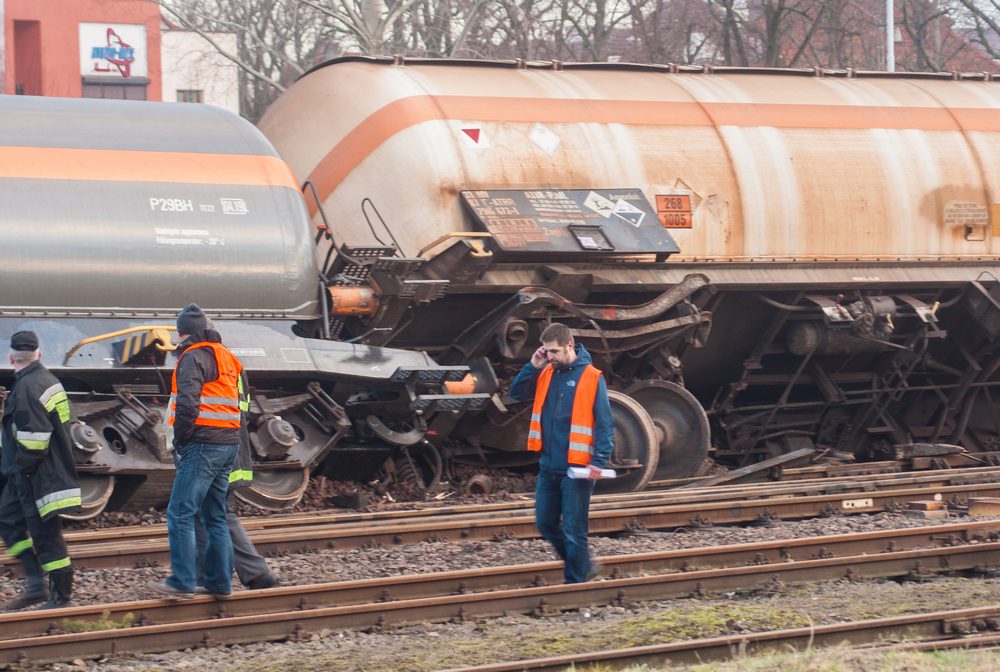
A derailment is never just a mechanical event. It’s a cascade of consequences: operations halted, equipment damaged, crews endangered, regulators notified, and costs mounting by the hour. For railroad operators, rail system owners, and industrial facilities that depend on reliable track, the aftermath can be measured in days of lost productivity, serious liability exposure, and the kind of regulatory scrutiny that doesn’t resolve quickly.
What makes derailments particularly frustrating is that they’re rarely random. In more than four decades of work across Kentucky, Illinois, and Tennessee, we’ve seen firsthand that the conditions leading to a derailment almost always develop gradually, leave detectable signs, and respond to disciplined maintenance. The event feels sudden. The path to it is long and traceable. Here’s what actually causes derailments, grounded in the mechanical and structural factors the Federal Railroad Administration consistently identifies in its accident data, and how a proactive maintenance program addresses each cause before it reaches the point where derailment becomes likely.
The Most Common Root Causes Behind Derailments
Look at FRA accident data over any span of years and a consistent picture emerges. Track geometry defects, broken rails and welds, and equipment defects appear repeatedly as the leading physical causes. None of these are mysterious failure modes. They’re the predictable results of wear, fatigue, deferred maintenance, and the relentless forces rail traffic imposes on infrastructure.
Track geometry defects are among the most prevalent causes, and they deserve careful attention because they develop gradually and can be hard to perceive without systematic measurement. Gauge widening is one of the most consequential: when the distance between the two rail heads grows beyond tolerance, wheel flanges lose the lateral support they need to stay on the rail. That condition doesn’t appear overnight. It develops as ties deteriorate, fasteners loosen, and repeated loading cycles push the rails incrementally outward. Surface irregularities, including dips and humps in the longitudinal profile, and misalignment in the horizontal plane create dynamic forces that compound under load and speed, stressing every component in the track structure.
Broken and defective rails are a distinct and particularly dangerous category, because many of the failure modes behind them are invisible from the surface. Internal fatigue cracks, known in the industry as detail fractures and transverse defects, develop within the rail head from repeated contact stress under wheel loads. A rail can look structurally sound in a visual inspection while harboring a crack propagating toward a complete transverse break. Thermal stress compounds the risk: rails expand and contract with temperature, and a rail already compromised by internal cracking is far more vulnerable to a sudden break under thermal tension or compression. Deferred maintenance that lets surface defects go unaddressed accelerates this internal fatigue.
The track structure itself, the combination of ties, fasteners, and ballast that supports the rails and holds them in position, is the third major category. Deteriorated ties lose their grip on spikes and fasteners. When ties fail, the rail can’t be held to gauge and the whole geometry of the track goes unstable. Failed fasteners compound the problem by letting rails move laterally and longitudinally under traffic. And when ballast becomes fouled with fines, contaminated with vegetation, or simply worn down through years of service without tamping, ties begin to shift under dynamic loading. The result is a track structure constantly working against itself, with each passing train degrading the geometry a little further.
What these categories share is that none of them typically produces a single, discrete failure without a prior history of deterioration. Gauge widens gradually. Fatigue cracks propagate over time. Ties and ballast degrade through cumulative wear. This is exactly why a reactive maintenance approach, one that waits for a visible problem before acting, falls short for derailment prevention. The conditions that cause derailments are almost always detectable before they become dangerous, but only if someone is looking with the right tools and the right frequency.
How Equipment and Operations Contribute to the Risk
Track condition doesn’t exist in isolation. Derailment risk is realized in the interaction between the track structure and the rolling stock operating over it.
Wheel and bearing defects introduce forces that even well-maintained infrastructure may struggle to absorb. A worn or out-of-round wheel creates impact loading dramatically higher than a properly profiled wheel at the same speed. Flat spots, which develop when wheels slide during braking, deliver repeated hammer blows to the rail surface that accelerate fatigue and can dislodge ballast. Bearing failures can cause a wheelset to bind or drag, producing lateral forces that challenge even sound geometry. The point isn’t to assign blame between track and equipment maintenance, but to recognize that the two are interdependent. Track that meets every applicable standard can still be degraded by equipment running outside specification.
Speed, load weight, and train length govern the magnitude of the forces the track must absorb. Higher speeds amplify any geometric irregularity: a surface deviation a slow train crosses without incident can produce a heavy vertical impact at speed. Heavier axle loads stress every component from the rail head down to the subgrade. Longer trains create additional challenges around curve negotiation and buff and draft forces in certain track configurations. Operations that routinely push infrastructure to the upper limits of its designed capacity accelerate wear and compress the window between when a defect develops and when it becomes dangerous.
Turnouts and switches deserve their own mention. These are mechanically complex components that must perform with precision under repeated cycling, and they account for a disproportionately high share of derailment incidents relative to their share of total track length. The switch points, stock rails, and switch rods must align correctly every time a train passes. A point that doesn’t close fully against the stock rail, a worn frog, or a damaged switch rod can send a wheel down the wrong path or drop it between components. Because turnouts often sit in yards and industrial facilities where speeds are low, operators sometimes treat them as lower-risk. In practice, their mechanical complexity means turnout maintenance deserves dedicated attention in any serious program.
Understanding these interactions helps operators prioritize. A segment carrying heavier loads or denser traffic needs more frequent inspection and faster intervention than the same segment under lighter service. That principle is built into the FRA’s regulatory framework, which ties track class requirements to speed limits and, implicitly, to the forces the track must be maintained to handle.
Why Track Inspection Is the First Line of Defense
If most derailment causes develop gradually and are detectable early, then the quality and frequency of inspection is the most direct variable an operator controls. Inspection doesn’t fix anything by itself, but it determines when defects are found and how much time remains to address them.
Systematic track inspection covers multiple dimensions of track condition. Geometry inspection measures gauge, surface, alignment, cross level, and twist against the tolerances for the applicable track class. Structural inspection evaluates ties, fasteners, and ballast. Rail inspection looks for surface defects, head wear, and signs of internal fatigue. Each catches different failure modes, and a complete program addresses all of them on schedules matched to traffic and track class.
Visual inspection, while essential, has one fundamental limitation: the internal fatigue cracks that cause many rail breaks simply can’t be seen from the surface. Ultrasonic testing, which sends sound waves through the rail and reads reflections from internal discontinuities, is the standard method for catching subsurface defects before they propagate to a complete break. This isn’t exotic technology; it’s routine practice in professional railroad maintenance, and it’s why systematic rail testing programs catch defective rail before it fails under a train. Magnetic induction and other non-destructive methods complement it in specific applications. Any inspection program that relies solely on visual methods is leaving a whole category of rail failure risk unaddressed.
The FRA’s track safety standards under 49 CFR Part 213 establish six track classes with corresponding maximum authorized speeds and minimum maintenance requirements. Class 1 track has different inspection frequencies and geometry tolerances than Class 4 or Class 5 track. Knowing where a segment falls in this framework isn’t just a compliance question; it’s the foundation for an inspection and maintenance program actually calibrated to that track’s risk profile. A Class 1 industrial spur and a Class 4 main line have fundamentally different needs, and treating them identically means over-investing in one or under-protecting the other.
Inspection frequency matters as much as inspection quality. A thorough inspection performed too rarely leaves gaps during which a defect can go from detectable to dangerous without being caught. The right interval for any segment depends on traffic density, speed class, and how fast conditions have historically changed. Operators who treat inspection as a periodic compliance event rather than a continuous monitoring process are accepting more risk than they may realize.
The Maintenance Practices That Keep Trains on the Rail
Inspection identifies problems. Maintenance resolves them. The two are inseparable in a serious derailment prevention program, and the maintenance response to inspection findings is where actual risk reduction happens.
Tie replacement is one of the highest-impact maintenance activities for derailment risk. The mechanical relationship between tie condition and gauge-holding ability is direct: a tie that can’t hold a spike firmly can’t keep the rail at correct gauge under load. Deteriorated ties don’t fail uniformly, either. They cluster in sections where drainage is poor, loading is heavier, or the original installation is aging out all at once, and a cluster of bad ties creates a geometry deviation that compounds with every passing train. Addressing tie condition before clusters develop works far better than replacing isolated ties after a geometry problem has already appeared.
Ballast is the foundation beneath the ties, and its influence on stability is pervasive. Clean, properly graded ballast holds ties at the correct elevation and alignment, distributes load into the subgrade, and drains water away from the tie zone. Fouled or degraded ballast loses all of those properties, and ties begin to pump under dynamic loading, moving vertically with each passing axle instead of staying put. That pumping action is a primary driver of surface and alignment defects and accelerates the deterioration of ties and fasteners. Ballast tamping, which mechanically consolidates ballast beneath and around ties, directly addresses this failure mode, and regular tamping on a schedule maintains the geometry that inspection is designed to verify.
Rail grinding and proactive rail replacement address the surface and near-surface defects that would otherwise propagate into the internal fatigue cracks behind rail breaks. Grinding removes surface irregularities, corrects the transverse profile of the rail head, and eliminates surface-initiated fatigue sites. A properly profiled rail distributes wheel contact stress more evenly, slowing the accumulation of fatigue damage. When grinding can no longer hold an adequate profile, or inspection reveals internal defects past a defined threshold, replacement is the answer, and planned replacement consistently costs less than emergency replacement after a break, to say nothing of the safety consequences of a break under traffic.
Grade crossing renewal and turnout maintenance round out the picture. Crossings are high-wear zones where road and rail traffic interact, affecting both train operations and road-user safety. Turnouts, as covered earlier, need dedicated attention to their mechanical components. A complete program addresses all of these on coordinated schedules rather than treating each in isolation.
On-Track Safety: Protecting Workers and Infrastructure During Maintenance
There’s an inherent tension in railroad maintenance: the track needs inspection and repair to stay safe for trains, but performing that work puts crews in an environment where trains operate. Managing that tension takes a structured, disciplined approach governed by FRA regulations under 49 CFR Part 214, not common sense alone.
Flagging protocols protect workers during track work by establishing clear limits of authority for train movements around work zones. A qualified flagger serves as the interface between the maintenance crew and train operations, coordinating with dispatchers so trains are properly notified and controlled before approaching a work zone. That coordination isn’t bureaucratic overhead; it’s what lets maintenance crews focus fully on the work instead of splitting attention between the task and the possibility of approaching traffic.
Work zone management goes beyond placing flags at the boundaries. It requires clear communication of the limits of authority, defined procedures for handling trains while a zone is active, and a chain of accountability so everyone from the crew on the ground to the dispatcher understands their role. When those elements are in place, crews can work with the concentration that quality track work demands. When they’re absent or poorly executed, the work itself becomes a source of risk.
Our on-track safety and flagging services reflect a simple principle: the quality of maintenance work depends directly on the safety of the environment it’s performed in. A crew uncertain about its protection from approaching traffic can’t give full attention to the inspection or repair in front of it.
Building a Program That Addresses Derailment Risk Systematically
Individual maintenance activities, however well executed, don’t constitute a derailment prevention program. A tie replacement here, a visual inspection there, a tamping run when the geometry gets bad enough to notice: that reactive pattern is how deferred maintenance accumulates and how gradual deterioration reaches the point of a derailment. Effective prevention takes a scheduled, documented program built around the specific characteristics of the track being maintained.
The foundation is the connection between inspection findings and repair prioritization. Inspection generates condition data on every element of the track structure, and that data should drive maintenance decisions systematically. Defects closest to the thresholds for the applicable track class get addressed first, and resources go where they have the greatest safety impact, not where they’re easiest to apply. That takes a clear process for turning inspection findings into work orders and scheduling them against available resources and traffic windows.
Documentation is the other pillar. A segment that’s been inspected, maintained, and documented builds a history that supports better decisions over time: how quickly conditions change between cycles, which sections deteriorate faster under your specific traffic, and where proactive investment has extended component life. Without documentation, every inspection starts from scratch, and the institutional knowledge that should guide prioritization lives only in the memories of individual workers.
Working with an experienced railroad contractor who knows your track class, traffic patterns, and regional conditions makes a measurable difference. Soil conditions across Kentucky, Illinois, and Tennessee vary widely and affect drainage, subgrade stability, and ballast performance in ways that shape maintenance requirements. Our decades of work in this region have given us a detailed understanding of what drives track deterioration in these environments, and we bring that context to every program we support.
For most operators, getting started means a thorough baseline inspection that establishes current track condition and flags the most pressing deficiencies. From there, a prioritized plan addresses the urgent items first while building toward a sustainable scheduled program. The goal isn’t perfection in a single season. It’s a trajectory of steady improvement that progressively cuts derailment risk and extends the life of the infrastructure.
Derailments Are Preventable
That’s not optimism; it’s the conclusion that follows from understanding what causes them. Track geometry defects, broken rails, deteriorated ties, fouled ballast, switch failures, and equipment interactions all develop over time, leave detectable signatures, and respond to disciplined maintenance. The technology and practices needed to catch these conditions early are well established and widely available.
The cost argument is just as clear. A single derailment, even one without serious injury, typically generates costs in emergency response, equipment recovery, track repair, operational disruption, regulatory investigation, and potential liability that dwarf the annual cost of a full inspection and maintenance program. The math isn’t close.
We’ve spent more than four decades helping operators across Kentucky, Illinois, and Tennessee build and run maintenance programs that keep their infrastructure safe and their operations moving. If you want to assess your current program or address specific track concerns, reach out to our team to start the conversation, or explore our full capabilities at Track Tech Inc..